The blog at
Big Jones
What's new, recipes and musings from Chef Paul
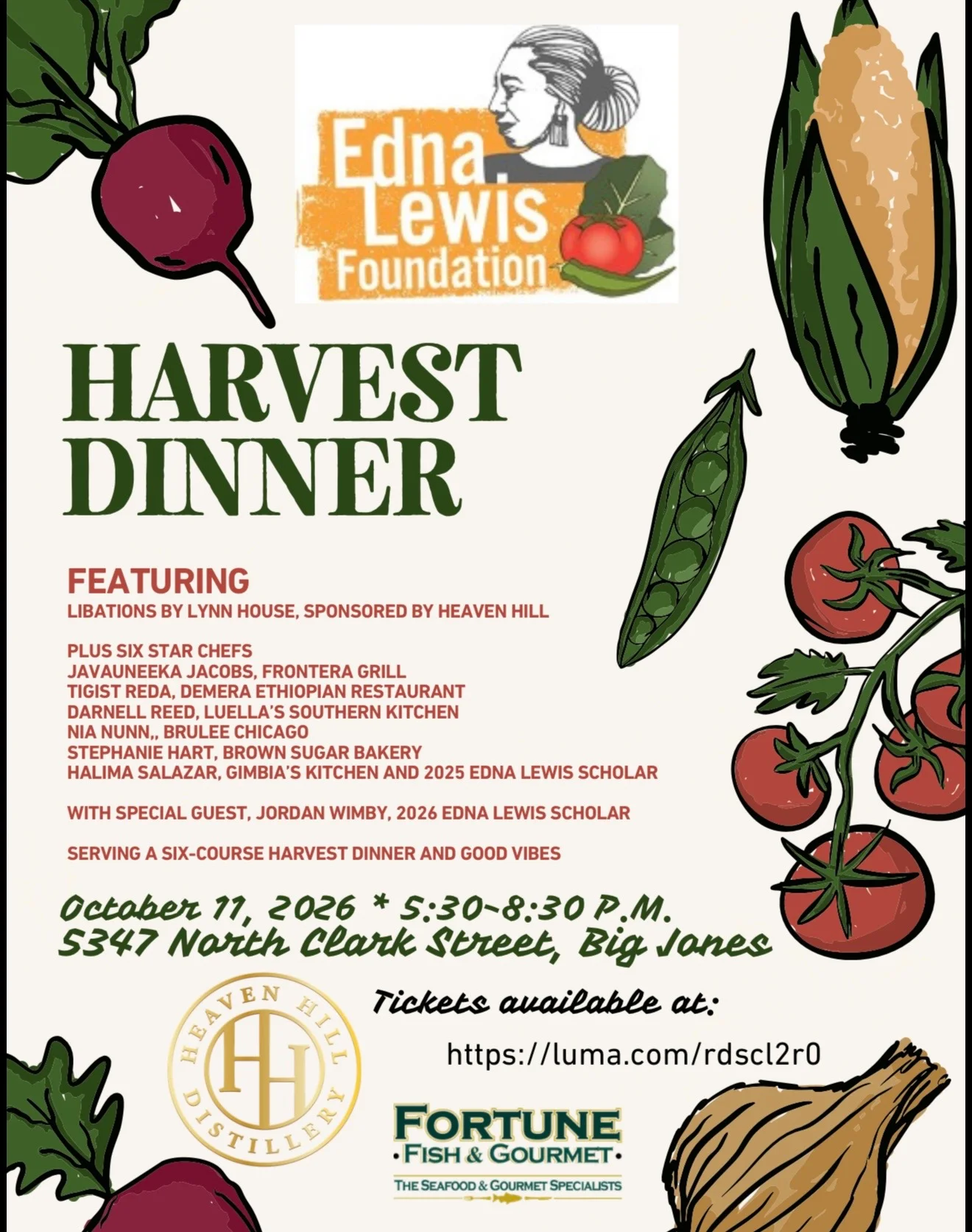
Seven Guest Chefs, One Very Special Evening
📅 Sunday, October 11, 2026
⏰ 5:00 Cocktails by Lynn House & Heaven Hill, 6:00 Guest chef dinner
📍 Big Jones, 5347 North Clark Street
💳 $150, 100% of ticket sales benefit the Edna Lewis Foundation
Join us for an epic dinner and an evening of immaculate vibes as Big Jones welcomes seven Black chefs to take over our kitchen in support of the Edna Lewis Foundation. Read more about the Edna Lewis Foundation below. Guest chefs include:
-Lynn House, Brand Ambassador for Heaven Hill Distillery will preside over the evening's libations, generously provided by event sponsor Heaven Hill
-Javauneeka Jacobs, Frontera Grill
-Tigist Reda, Demera Ethiopian Restaurant
-Nia Nunn, Brulee Chicago
-Darnell Reed, Luella's Southern Kitchen
-Stephanie Hart, Brown Sugar Bakery
-Halima Salazar, Gimbia's Kitchen, Oxford, MS and 2025 Edna Lewis Scholar
We'll also be joined by Chicago's own Jordan Wimby, 2026 Edna Lewis Scholar
More about the Edna Lewis Foundation below the fold 👀👀👀
The Edna L ewis Foundation was created In January of 2012 by the late, great Chef Joe Randall to revive, preserve and celebrate the rich history of African-American cookery by cultivating a deeper understanding of Southern food and culture in America.
The guiding spirit of The Foundation is its namesake, Chef Edna Lewis, an early champion of Southern cookery who helped educate and mentor generations of chefs and food enthusiasts, while celebrating the African American culinary community and culture.
Today the Board of Trustees, led by Chairperson, Mashama Bailey continues this legacy, while providing new culinary programming, scholarships and training to serve an expanded mission to provide access to opportunities for women and people of color within American food and foodways.
The Foundation advocates for the Southern tradition of the original farm-to-table lifestyle, eating with the seasons, a the sense of community, and the satisfactory feeling that hard work is always rewarded by good food.
.Board of Trustees:
-Mashama Bailey, Chairwoman, James Beard Award-winning Chef, The Grey, Savannah, GA and L'Arret, Paris, France
-Nina Williams-Mbengue, niece of Ms. Lewis and retired Program Director, National Conference of State Legislatures
-Adrian Lipscombe, Co-founder, Muloma Heritage Center, 40 Mules, and 2026-27 Obama Foundation USA Leader
-Deb Freeman, Emmy Award-winning Director and Host of the documentary film, Finding Edna Lewis
-Paul Fehribach, Chef and Co-Owner, Big Jones and author, The Big Jones Cookbook and Midwestern Food
Andersonville's biggest event Midsommarfest is Friday June 12 through Sunday June 14! Clark Street will be busy!
May 27, 2026:
Dinner Specials starting Thursday:
Cast Iron-Seared Florida Red Snapper, Anson Mills Farro Piccolo creamed with parsnip puree, caramelized Werp Farm fennel & baby turnips, roasted pepper relish
Tempura Chesapeake Soft Shell Crab, Savanna Red Rice, charred Werp Farm rapini, pickled fiddlehead gribiche
Old Virginia Fried Steak: Beeler's Pure Pork schnitzel, German-style finherling potato salad, charred scallions
Klug Farm Strawberries, homebaked vani
lla shortcake, whipped Kilgus Farmstead cream
Brunch Specials for Saturday & Sunday:
Frances Fehribach's Schnecken: Chef;'s grandma's cinnamon roll recipe in hand-rolled butter pastry with cardamom, filled with swirls of Ceylon cinnamon and sorghum molasses, sour cream royal icing
Hillbilly Ham & Biscuits: Allan Benton's country ham sliced thick & pan-fried, sweet potato angel biscuits, grilled spring onions, morel mushroom cream gravy
Old Virginia Fried Steak & Eggs: Beeler's Pure Pork schnitzel, two sunny eggs, creamy grits and voodoo greens
Barbecued Shrimp Pistolette: Gulf white shrimp simmered in Creole-style barbecue sauce and stuffed in a homebaked French roll, smothered drunken style. Served with creamy grits.
May 2026
Celebrate with Andersonville Restaurant Weeks, March 15-29!
Dinner menu $45 (from 4:30pm):
First Course
South Coast Risotto: Louisiana crawfish tails & lump blue crab with Vialone Nano x Nostrale rice simmered in shrimp court-bouillon, shoepeg corn
Duck Liver Terrine: Rohan duck livers whipped with shallots, butter, & port wine, with Balaton Cherry preserve, house bourbon mustard, duck fat toast
Winter Salad: Blond frisee with wine-poached bosc pear, shaved Jarlsberg Swiss cheese, toasted pecans, scallions, red raspberry vinaigrette
Bread Service
Charleston Philpy: Heritage Carolina Gold Rice flour bread, whipped honey-coriander butter
Entree
Fried Chicken: our updated recipe cooked under pressure with canola oil, served with "dirty rice" jambalaya and our house trio of hot sauces, choose light or dark meat (two pieces)
-or-
Fischer Farms Oxtail Dumplings: Braised & sauteed oxtail with tomato confit and king trumpet mushrooms in its own gravy with sweet potato dumplings
-or-
Pasta, Flagioli, & Morels: Hand-rolled potato cavatappi simmered in Nichols Farm baby lima bean gravy with roasted morel mushrooms, shaved Pecorino
Dessert
Almost Spring Lemon Pie: Lemon curd in heirloom oat crust with Swiss meringue, candied black walnuts and a whisper of huckleberry conserves
-or-
Bourbon Bread Pudding: drunk with bourbon whiskey, fragrant with warm spices, served with homemade apple butter, salted caramel, Tahitian vanilla bean ice cream
$30 Brunch and Lunch menus are different but also especially fun!
(More about ARW )
Andersonville Restaurant Weeks - March 15-29
Walleye weekends are on for Lent! and we are doing our best to keep it in stock during the week as well, please call to in to check on availability if you want to be sure. But Fridays and Saturdays you can come with confidence. Here's this week's walleye:
Walleye Belly Fish & Chips: Hard cider tempura-fried belly with thrice fried potatoes, hushpuppies, creamed Nichols Farm baby lima beans, spicy remoulade
Crispy Skin Seared Walleye Loin: potato rosti, fire-roasted broccoli raab, lemon & tarragon beurre, last summer's pickled peach relish
February 18 2026
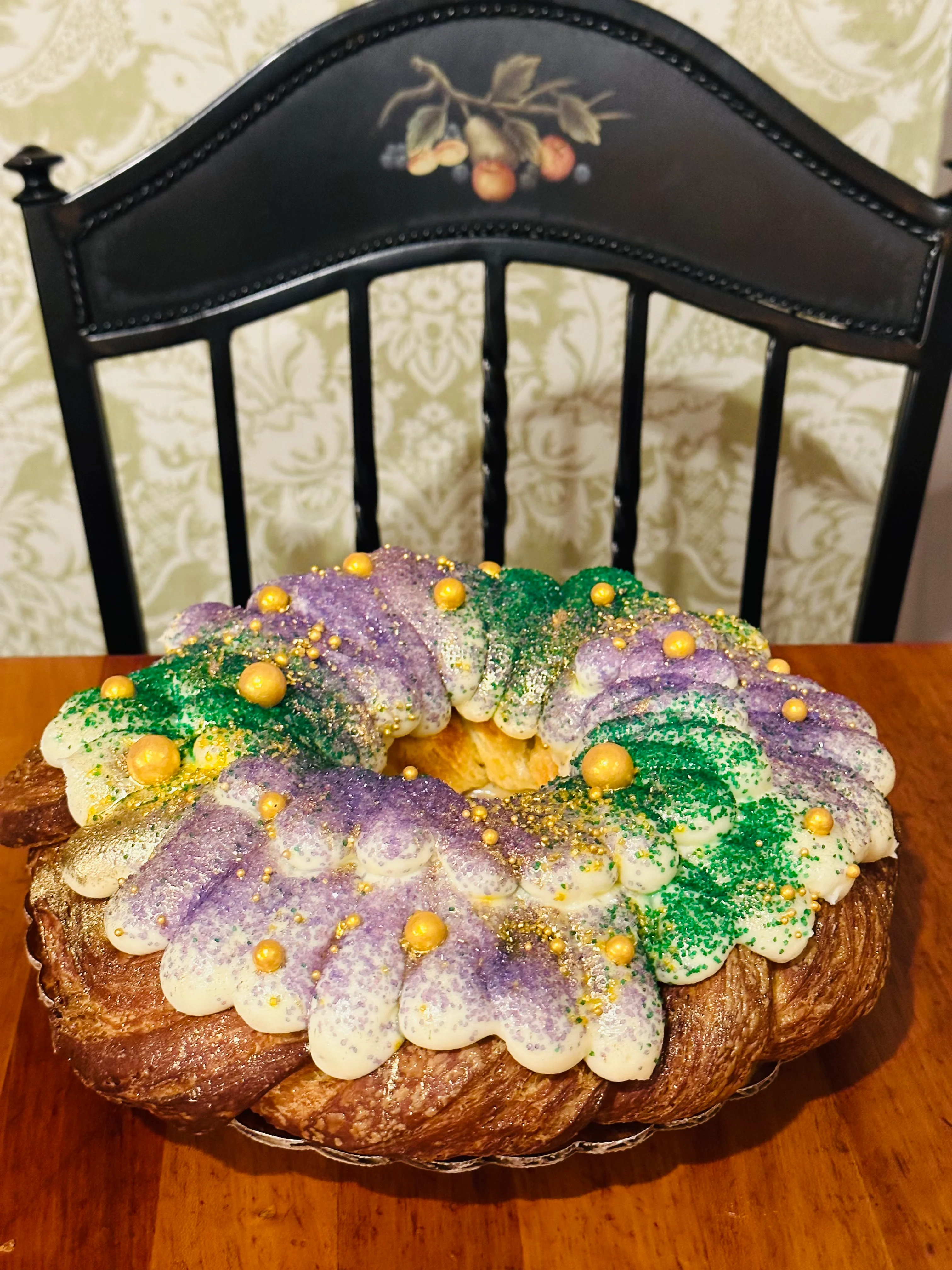
Jan 14 2026: Mardi Gras and Chicken & Waffles!
We're excited to be cooking up Louisiana specialties both Cajun and Creole as we celebrate the Mardi Gras season and get ready for Chicago Restaurant Week.
Cool stuff to report this week are new brunch menus with some items y'all have been asking for, and we have our first walleye catch of 2026!
New on the brunch menus we have:
Chili Garlic Steak and Eggs Fischer Farms flatiron steak marinated in gochujang and fruit juices, served with smothered okra, buttered Cahokia rice, and two fried eggs
Chicken and Waffles boneless leg & thigh quarter cooked in our famous recipe, with Carolina Gold Rice waffles, sweet potato puree, butter pecan praline sauce, and a sunny egg
And dinner specials this weekend:
Paneed Walleye pan-fried with brown butter, Potatoes Dauphine, fire-roasted broccoli raab, blue crab tarragon beurre monte, pickled peach relish
Walleye Belly Fish & Chips fried crisp in hard cider batter, with thrice-cooked potatoes, sweet and sour cabbage, and spicy remoulade
Jan 14 2026: Mardi Gras and Chicken & Waffles!
We're excited to be cooking up Louisiana specialties both Cajun and Creole as we celebrate the Mardi Gras season and get ready for Chicago Restaurant Week.
Cool stuff to report this week are new brunch menus with some items y'all have been asking for, and we have our first walleye catch of 2026!
New on the brunch menus we have:
Chili Garlic Steak and Eggs Fischer Farms flatiron steak marinated in gochujang and fruit juices, served with smothered okra, buttered Cahokia rice, and two fried eggs
Chicken and Waffles boneless leg & thigh quarter cooked in our famous recipe, with Carolina Gold Rice waffles, sweet potato puree, butter pecan praline sauce, and a sunny egg
And dinner specials this weekend:
Paneed Walleye pan-fried with brown butter, Potatoes Dauphine, fire-roasted broccoli raab, blue crab tarragon beurre monte, pickled peach relish
Walleye Belly Fish & Chips fried crisp in hard cider batter, with thrice-cooked potatoes, sweet and sour cabbage, and spicy remoulade
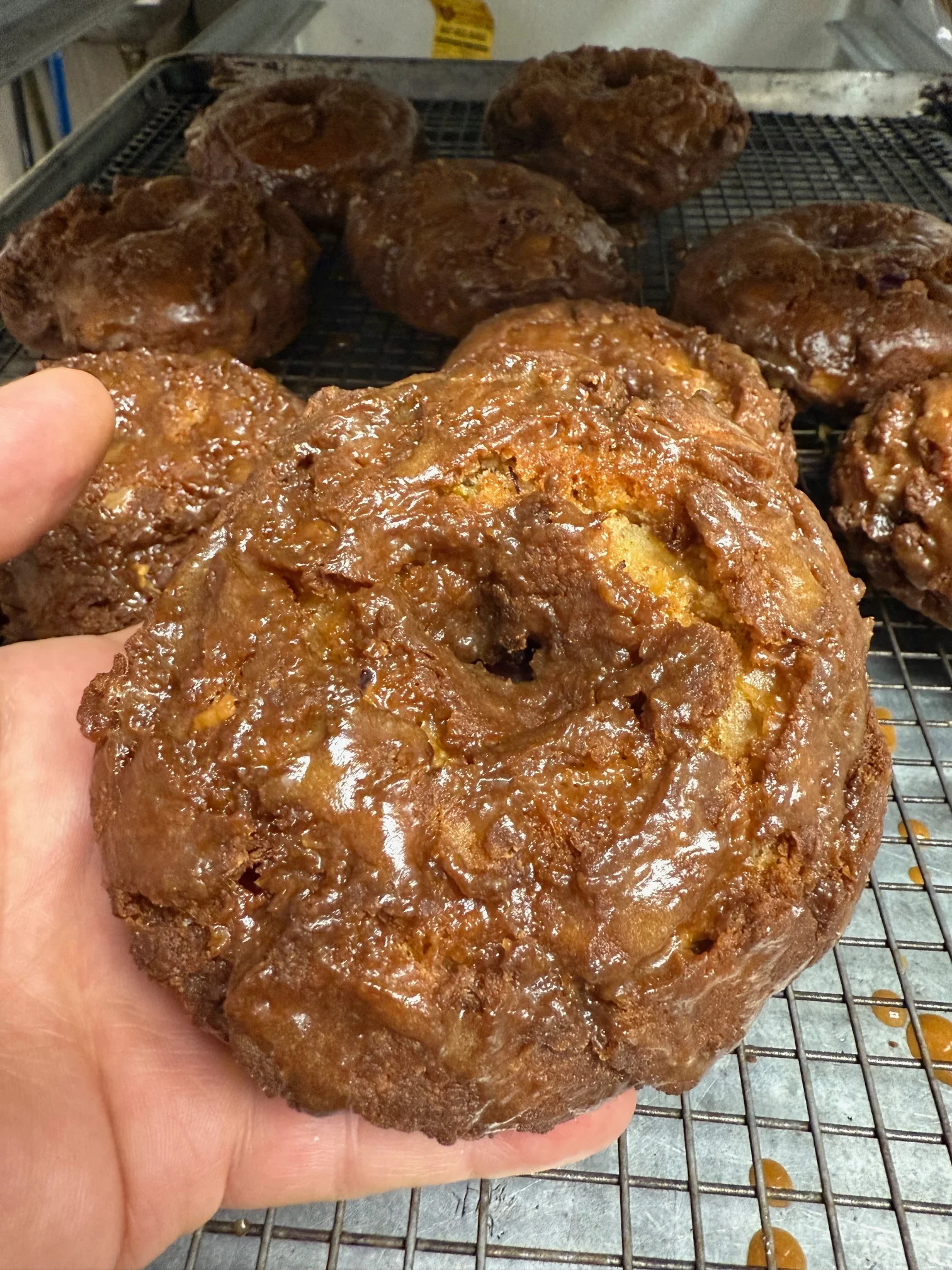
The new Smash Hit on the Brunch Menu: Apple Cider Fritters
In the fall of 2023, we decided to diversity the bakery offerings on our bunch menu beyond the expected cornbread/biscuit/beignet trio that's anchored our bakery menu since opening in 2008. Maybe the most exciting are the kolaches (more on those in a future post), which are found in SW Louisiana and Eastern Texas as well as Saint Louis, but this post is about the runaway best seller of the lot. Apple fritters are fixture of Midwestern donut shop display cases, and we have never shied away from letting our Midwestern roots dance with the heritage Southern cooking that is our calling card.
Mashing these up with cider donuts, a must at Wisconsin and Michigan roadside orchards, and cheffing it up in ways only we know how to do, we've come up with a pastry that has everything you want in a cake donut: crunchy, crumbly crust, flaky and tender interior, fragrant with a clutch of spices, and tangy with the best orchard apple cider we can get our hands on. Minced local heirloom apples add texture and a toothsome quality to each bite.
If you're the adventurous type, these aren't difficult at all to make at home, and they'll be a crowd pleaser at any party you're hosting or event you take them to. Here's our recipe:
Makes about 12 fritters
Begin by reducing 2 quarts apple cider (we use Seedling's mutsu cider) to 2 cups in a stainless steel saucepan on the stove top. Bring to a boil, reduce heat to a low boil, and monitor while it boils down to 2 cups, about 45 minutes.
• 8 ounces granulated sugar
• 2 large eggs
• 1 oz melted butter
• 3 ounces crème fraiche or sour cream
• 1 cup cider reduction
• 22 ounces all purpose flour, plus extra for dusting.
• 3/4 oz baking powder
• 1/2 oz kosher salt
• 1 tablespoons coriander
• 2 teaspoons korintje cinnamon
• 1 teaspoon ground nutmeg
• 1 and 1/2 cups tart cooking apples, diced 1/2", with skin on
• 1" vegetable oil in a large cast iron or enamel dutch oven, for frying
For the glaze:
• 1 cup apple cider reduction
• 1 pound powdered sugar
• 1 teaspoon citric acid
• 1/2 teaspoon malic acid
• 1/2 teaspoon kosher salt
Using a cnady thermometer to monitor the temperature, heat the oil to 350F and reduce heat to maintain the temperature while you mix the dough.
n a small mixing bowl, whisk the eggs and sugar together until smooth. whisk in the melted butter and creme fraiche, then the cider reduction. Prepare the dry ingredients in a separate bowl.
Sift the dry ingredients together and add the apples. Stir in the wet ingredients and gradually work into a soft dough.
Roll out on a lightly dusted board to about 2/3" thick. Use a 3" biscuit or cookie cutter to cut individual discs, then use your finger to put a dimple in the center of each one. Any trim or excess dough can be reshaped and used up to two times.
Fry in batches 3-4 at a time, allowing plenty of space between fritters. Heat the oil to 350 before each batch, then don your best to maintain 325F during the fry. Fry until a rich chestnut brown on each side - about 4-5 minutes on side one - be careful when flippin they will be delicate, and grease will splatter - then ab out 3-4 minutes on side two. drain on wire racks and let cool until warm but not hot to the touch before glazing.
To prepare the glaze, whisk all ingredients together until smooth. We use a squeeze bottle to drizzle the glaze over the donuts. You can use a spoon, a ladle, a squeeze bottle, or even a pastry bag. You can even dip if you like - whatever works for you. Glaze only one side and enjoy warm or let cool to room temperature for classic enjoyment. Will keep in a covered container for a day.
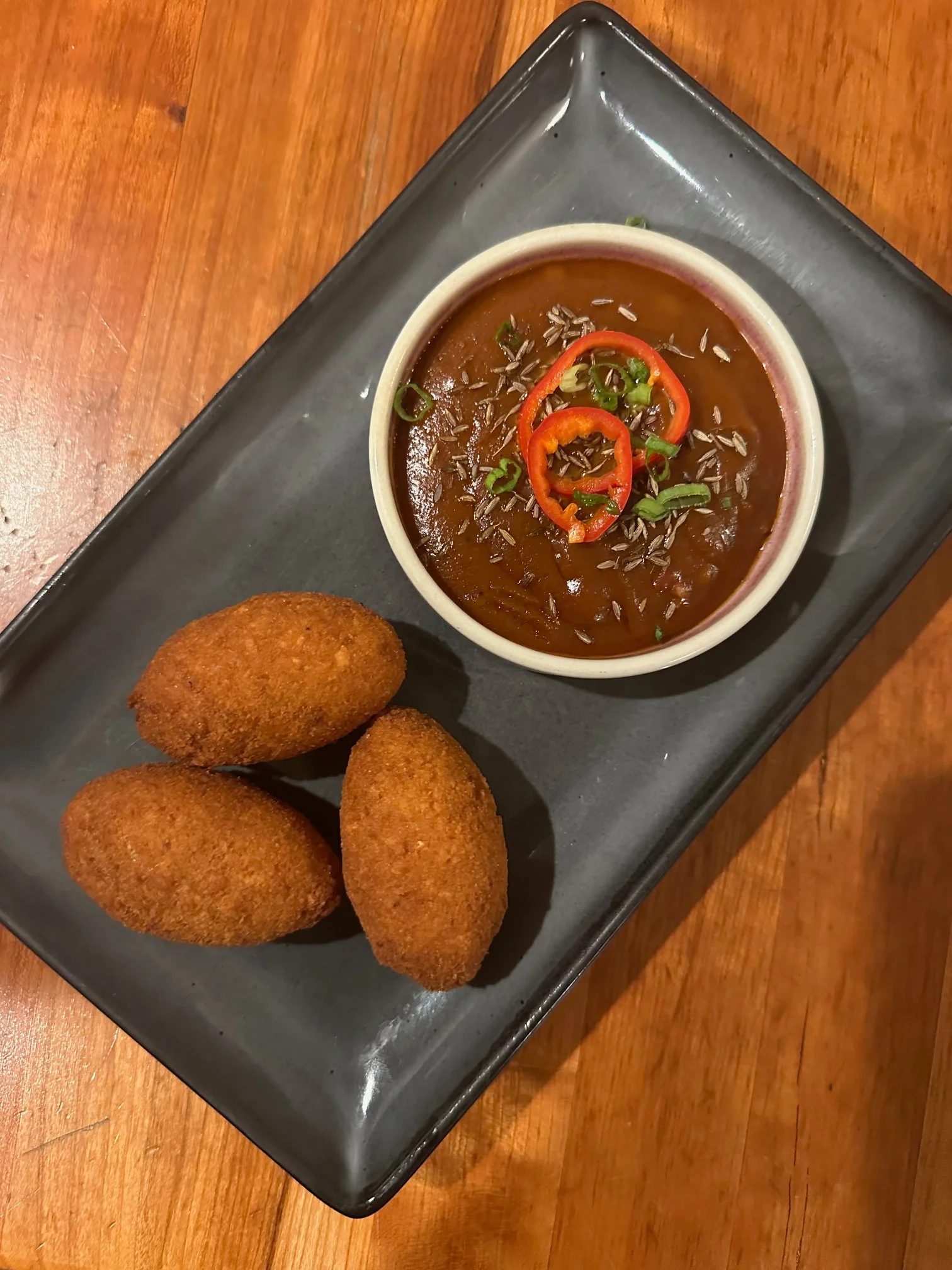
West African Accara, a new favorite snack
Most folks who have more than a passing familiarity with the roots of Southern cooking know that a lot of those roots are in West Africa. This goes not just for ingredients such as black eyes peas, okra, and benne, but also in cooking techniques such as gumbo and grits.
I'm always keen to present you with cuisine that is at once grounded in the better angels of history and tradition while reinventing our food in a way that reflects the Modern South as it truly is: a dynamic, changing, multicultural region which is most exciting for its diversity and most delicious for the same reason.
Some of the best meals I've had in the South have been from African chefs such as my friends Nigerian-born Akintunde Wey and Indian-American Vishwesh Bhatt , or Saint Lucia-born Nina Compton or Senegal-born Serigne Mbaye , so Southern cooking isn't as straightforward or preserved in amber as a lot of people would like to believe. The stereotypes and tropes still imposed by many upon Southern cuisine are as useless as the Lost Cause mythology which only delayed the much-needed reckoning to set the South on a path forward.
Several years ago, I picked up an excellent book on Senegalese cooking by the brilliant Pierre Thiam , and fell in love with the cuisine, but particularly the popular street food known as accara, a black eyed pea fritter made with peas that have been painstaking peeled of their skins. This yields an interior like fluffy bread and with a pure, green, bean flavor without the earthiness typically associated with black eyed peas.
You should get Chef Thiam's book and see his take on accara, but also to enjoy the many other simple and delicious recipes throughout his book Senegal. I did develop my own take on them, and this dipping sauce that harkens back to the days I spent at Hi Ricky Asia Noodle Shop, where we would pump out about ten gallons of peanut sauce a week to go with chicken satays. This recipe is updated as well to incorporate some additional complexity from red miso. That's another little-known secret about the South: the oldest miso manufacturer in the United States has been quietly plying their craft in Asheville, North Carolina for almost 50 years!
Accara
Makes about two dozen fritters
• 1 pound peeled black eyed peas
• 1 tablespoon kosher salt
• 1 tablespoon granulated onion
• 2 teaspoons granulated garlic
• 1/2 teaspoon cayenne pepper
• vegetable oil, for frying
To peel the peas, place then in a large heat-proof bowl or basin, and pour over with two quarts boiling water. Soak for 10-15 minutes. Rinse with cold water and transfer in batches to the bowl of a blender or food processor, filling about halfway with peas and covering with water. Pulse a few times to loosen the skins without breaking up the peas too much. Transfer to a clean bowl and flll with clean water. Rub the peas between your hands to remove the skins, then allow then to float off by tipping the bowl and letting the skins, which will float, run off. Repeat as necessary until you have all clean, white beans. This process will take about ten minutes.
Soak the peeled beans in two quarts cold water overnight in the refrigerator.
The following day, grind in the food processor with the seasonings until they form a smooth paste. This may require two batches depending on the size of your food processor.
Use a 1.5-ounce scoop to scoop up balls, and use your fingers to form them into football shapes. Fry in 325 degree oil until golden brown and registering 185F on a food thermometer.
Peanut Miso Sauce
Makes about one quart
• 2 Tablespoons vegetable oil
• 1 Tablespoon fresh garlic, minced
• 2Tablespoons fresh ginger, minced or grated on a microplane
• 1 scotch bonnet peppers, seeded and minced
• 3 Tablespoons apple cider vinegar
• 1 cup dark brown sugar
• 1/3 cup red miso
• 1 and 1/4 cups natural peanut butter (your choice chunky or smooth)
• 2 cups warm water
In a medium saucepan, saute the garlic, ginger, and pepper over medium-low heat just until sweated and aromatic. Maintaining medium-low heat, add the vinegar and sugar, stirring well, then the miso. The mixture will be thick and pasty. Add the peanut butter and water in turns, adding 1/4 cup of peanut butter, then a 1/4 cup of water and so on, mixing well after each addition before adding more, then continue until everything is incorporated. Stir faithfully until the mixture boils. Give a good whisk to emulsify and serve at once.
This sauce will have a tendency to separate - adding a tablespoon of warm water while giving it a good whisk will bring it back togther.
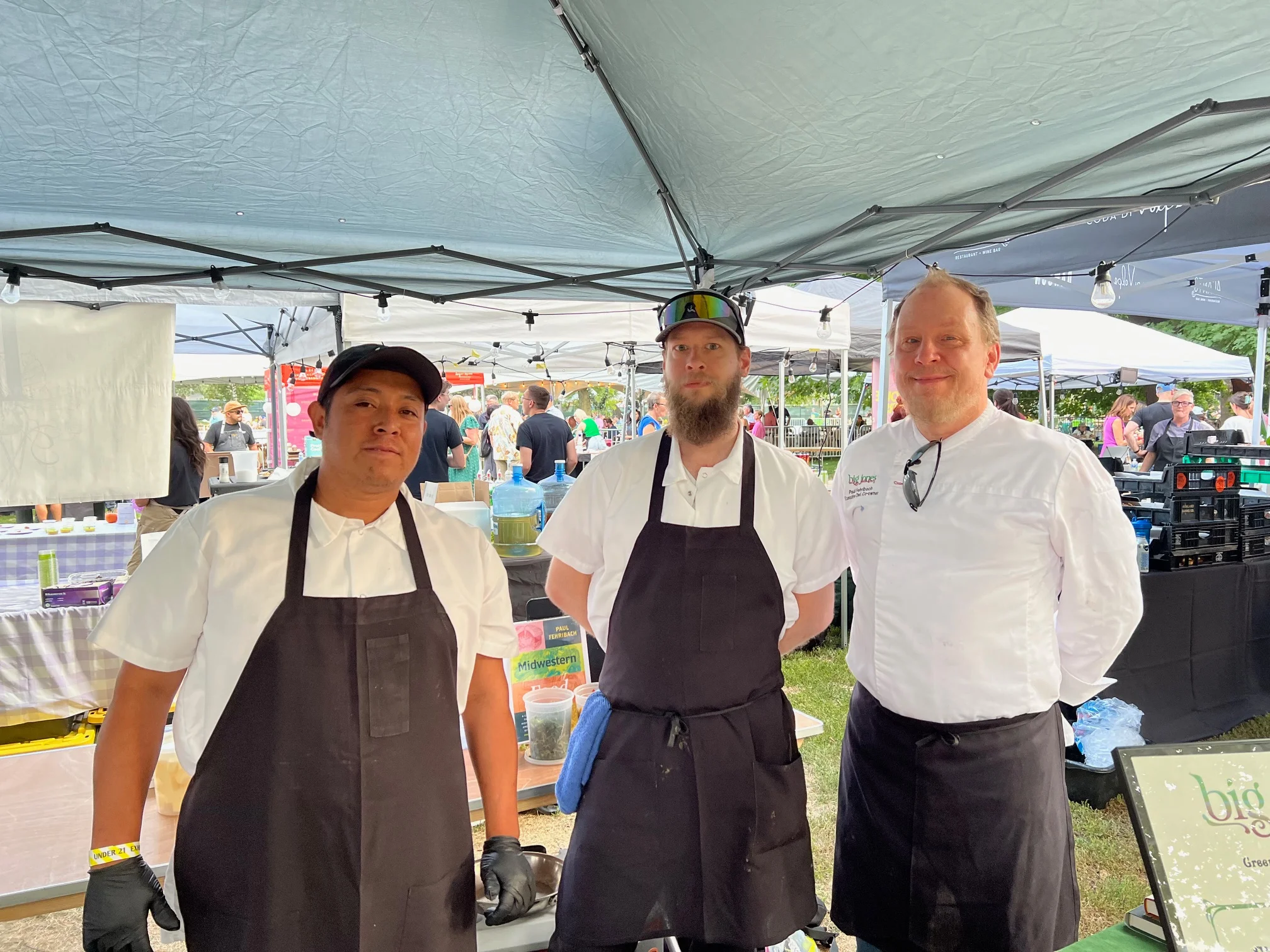
Green City Market Chef's Barbecue recap
This past Thursday, September 5 was the 23rd (or 25th according to some observers) Green City Market Chef's Barbecue . This annual event is the largest fundraising effort annually for the market, which was founded in 1999 by Abby Mandel and a group of Chefs including Sarah Stegner and Rick Bayless to be a farmer's market for both chefs and consumers to buy directly from farms in the Chicago Area.
Now 25 years later, it's hard to imagine their vision having had a more profound impact on Chicago's dining scene and foodways than it has had. Virtually every chef and restaurant of consequence over the last generation has shopped there is not weekly, have used it as a networking hub to meet farmers who would deliver to their restaurants, transforming the quality and locality of the food on Chicago diners' plates along the way.
I began shopping at the Green City Market in 2003 when I was running the kitchen at Schubas Tavern, and met farmers who would continue to supply me for years, especially after opening Big Jones. Green Acres, Genesis Growers, Kinnikinnick Farm, Growing Power, Seedling, Mick Klug Farm, Nichols Farm, and many more became synonymous with our table at Big Jones.
But, times change. We miss Green Acres since the Eccles have taken a well-earned retirement from farming. We miss Genesis Growers since they pulled out of the Chicago market, and Growing Power and Kinnikinnick Farm since they have since shut down.
Therein comes the importance of the Chefs Barbecue. It raises funds for the markets Farm Foraging program, via which new farmers are sought out and recruited by the market, and we have a new generation of farmers feeding Chicagoans in operations like Frillman Farm, Froggy Meadow, Avrom farm, and Severson Farms. The market has since expanded beyond Lincoln Park to have outposts in Avondale and the West Loop. So, to continue the local foods system against the increasingly steep odds it faces in the post-pandemic food economy, we come together annually to support the market by offering the best of our kitchens alongside beverage partners who keep the even well-lubricated.
This year, more than 80 of Chicago's very best restaurants and bakeries came together with venerated beverage producers to raise over $200,000 for the market. That's a job well done, and one which humbles us to be a part of.
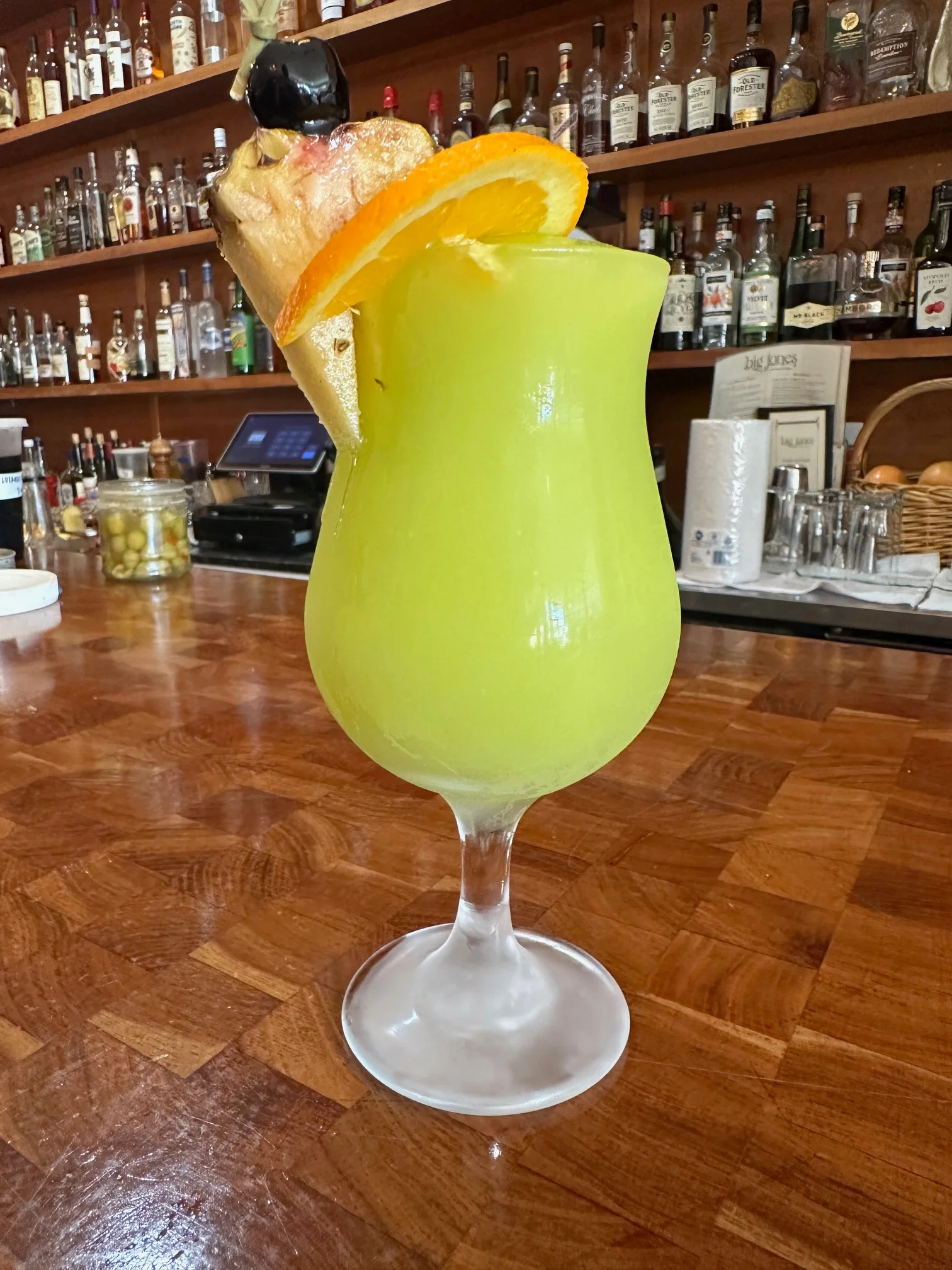
An epic cocktail for melon season
Because of our (relatively) short summers and the need melons have for a long, sunny growing season, melon season here in the Great Lakes has always been a kind of short. For better or for worse as far as climate change goes, summers ARE geting longer here, and that's good because we love melons! We also love frozen cocktails so our Beverage Director Zach Overstreet came up with this gem.
We've got this on the cocktail list until the season is over, but I'm going to share the recipe because it's so good, you should be able to make it at home. The recipe we use at the restaurant varies slightly because it goes into a frozen drink machine, but this is tweaked so it'll taste exactly the same made in your blender at home.
We call for one of our favorite hometown gins by Letherbee, but you can use your favorite London Dry. This is also really good with our local North Share Distillery Mighty Gin. Enjoy!
Kabuki Two-Step (serves four)
* 1 large or two small green-fleshed melons, such as green honeydew, Crenshaw, or Galia
* 4 ounces Letherbee gin
* 3 ounces Midori melon liqueur
* 3 ounces simple syrup
* 2 ounces fresh squeezed lime juice
* 1 ounce Herbsainte
* 1/4 teaspoon kosher salt (optional)
Cut the melons in half lengthwise, and use a spoon to remove the seeds. Cut into slices 1" thick at the thickest part, and carefully cut away the rinds. Cut the flesh into rough 1" pieces, and measure a generous quart of them. Save the rest for a snack. Spread the generous quart of melon chunks on a cookie sheet lined with waxed paper or plastic wrap, and freeze thoroughly, preferably overnight.
Place the frozen melon chunks in the bowl of a blender and add the remaining ingredients. Puree until smooth, about one and a half - two minutes. Serve at once ganished with more sliced melon, pineapple, or other summer fruit, and fresh edible flowers such as nasturtiums.
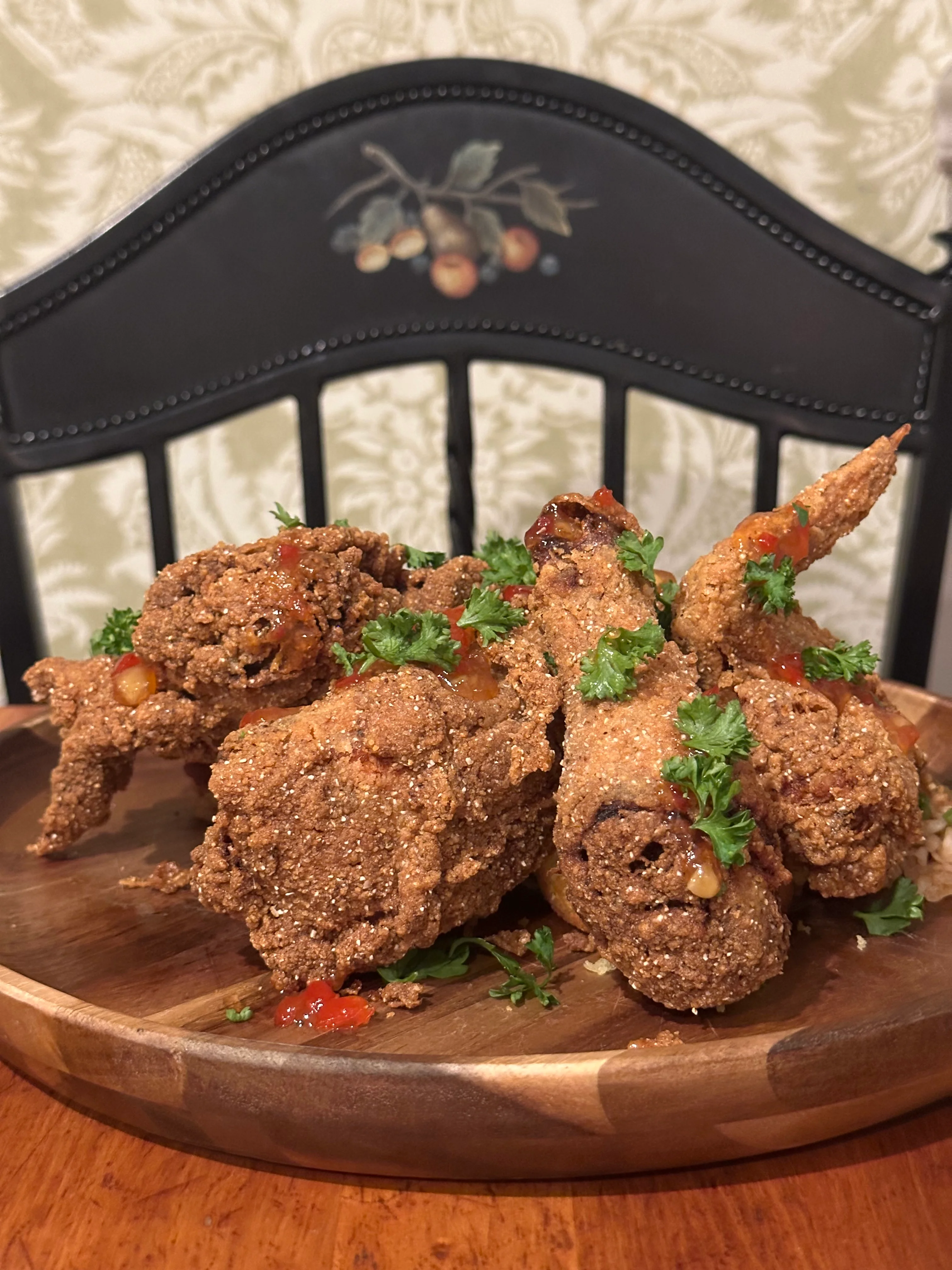
How did we make America's Best Fried Chicken even better? (and gluten free!)
If you've heard of Big Jones, chances are you've heard a thing or two about our fried chicken. We're mighty proud of it - it's gotten more accolades than we can possibly list, but it burst into the national culinary conscious in 2010 when Bon Appetit named us one of the Top Ten Best Places for Fried Chicken
Then just a few years later, The Chicago Tribune's Kevin Pang declared " Paul Fehribach serves my second favorite fried chicken in America " after New Orleans' legendary Willie Mae's Scotch House, and we couldn't be bigger fans of Willie Mae's and wish them the best in getting reopened after some fire-related damage. Then in 2016, Eater critic Bill Addison named Big Jones the Best Fried Chicken in America on Eater's Restaurant Superlatives list. The accolades have been numerous and continue, but these are our favorites.
We've long been a desination for people who either avoid gluten or have an allergy to it, because our menu is largely based on corn and rice as it goes with Southern cuisine. Over the years, many of these folks have asked if they could get a gluten free version of our fried chicken, and while eliminating wheat from the recipe would be challenging, it wouldn't be impossible, but with many items cooked in the fryers, cross contamination with gluten would be an issue.
I've long taken inspiration from Karen Hess' thoughtful reprint of the historically important Carolina Rice Kitchen cookbook , and thought it would be a good start, but then Covid intervened and we spent more time playing defense in the kitchen than innovating.
As we rebuilt from Covid, it's only been the last year when we felt like we had our operation down pat again, and we began development. We now had a dedicated fried chicken fryer, a Winston Industries beauty that mimics the low pressure created when you fry in a heavy dutch oven with the lid on, as Harlan Sanders' original formula famously called for, and is my personal favorite technique when frying chicken at home.
It was clear rice would play a big role, and we use a fine rice flour from the Delta region, but it turned out that while it provides the desired crispy crunch, it doesn't provide the rapid browning you get from wheat flour to yield those comforting, cozy Maillard Reaction flavors and aromas. It also lacked the body and heft of our foundational recipe. We found tapioca flour provided better browning and chick pea flour provided some browning as well as heft to the breading. But it didn't stick to the chicken skin no matter how we tried. Enter glutinous rice flour, sometimes called sweet rice flour. This rice flour doesn't contain any of the offending gluten but rather is so-called because it's sticky. Really sticky. Voila! With some educated guesses and lots of trials, we arrived at a recipe that has the same thick, extra-crispy breading, yet fries up if anything, with a less greasy character than our original recipe. Every single guest we blind tasted our two fried chickens with picked the gluten free version!
Our seasonings and spices are exactly the same, formulated according to weight. This wasn't that hard to do because we make the dredge in 200-pound batches. That, friends, is how you take one of America's favorite fried chicken recipes and make it better. We think it tastes better, and because it's gluten free and celiac-friendly, we can share it with more people. Now THAT'S great fried chicken.
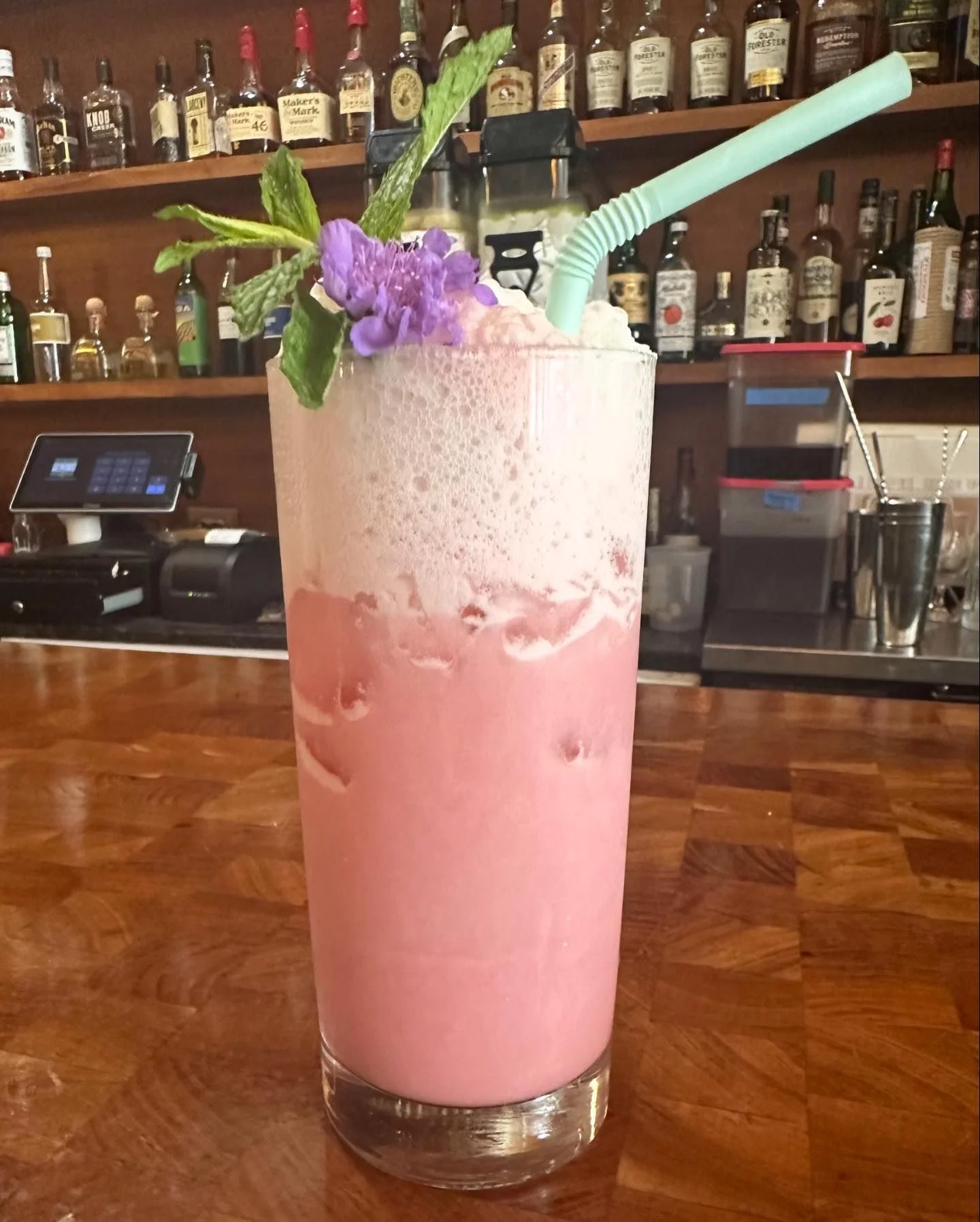
A Treat for Teetotalers and the Perennially Young at Heart: Phosphate Sodas!
One of our resolutions for 2024 has been to update our bar menu with more hand-crafted alcohol-free libations. One of our most popular N/A cocktails before the pandemic was a phosphate soda made with key lime, and the more we thought about phosphate sodas, we realized they respresent a great chance for us to use seasonal ingredients to create timely and fresh flavors for you.
A throwback to the soda fountains of yore, phosphates were created by adding acid phosphate, a tangy natural food acid, to flavored syrups and then topping them with club soda for a sweet fizzy treat. The acid phosphate is a way of adding a little tang to the libation without imparting any flavor such as you would get with say, lemon juice. It allows for a tangy taste with a pure single flavor.
As bottled sodas became the norm, soda fountains faded from the American landscape and phosphate sodas went with them. But try one, and you'll be as ready for a comeback as we are!
Our current phosphate offerings are Michigan Cherry and Cream Soda. We make these by hand starting with great ingredients like Klug Farm Balaton cherries and organic Tahitian vanilla beans, with Kilgus Farmstead creamline cream for that silky sparkle.


